When the war began on March 9, I was at work. Suddenly, we heard several massive explosions. News quickly spread that Iran had been attacked.
At that exact moment, I was in the restroom because I was suffering from severe intestinal pain. I could hear the explosions and the terrified screams of my coworkers outside, but the pain was so intense that I could not leave immediately. I remained there for several minutes, listening to the sounds of fear, panic, and chaos around me. By the time I finally came out, many of my coworkers had already left the building. Management had ordered the company to shut down immediately because our office was located very close to military and sensitive areas.
Outside, it felt like the end of the world
Outside, it felt like the end of the world. People were running desperately toward metro stations or their cars, trying to reach safer places. Near the company, I saw one of my coworkers — someone I had never been close to and usually tried to avoid. Yet in that moment, without even thinking, I looked at her and simply said: Take care of yourself. War changes human emotions in strange ways.
There were also two schools near my workplace, and terrified parents were rushing toward them to pick up their children.
Although I have never considered myself afraid of war, explosions, or even death itself, seeing so many frightened people running for safety overwhelmed me emotionally. I felt a lump in my throat and wanted to cry.
I remember telling myself that I needed to stay calm and help others if I could. Then I noticed a young schoolgirl, perhaps 12 or 14 years old, leaning against a wall. She looked completely frozen with fear and was trembling uncontrollably. I immediately hugged her and took her inside a nearby shop. She was shaking, crying intensely, and repeatedly calling for her father I held her trembling hands and told her: Scream if you need to. Cry, and say whatever you want. Let the fear out.
She clung to me tightly and continued sobbing. I asked for her father’s phone number, but communication networks were unstable. After several attempts, I finally reached him. I told him that she was safe, but the streets were extremely dangerous and crowded, and that he should not come into that area. I promised him that I would take his daughter by metro to a safer meeting point where he could pick her up by car.
In the following days, large numbers of people were trying to leave Tehran. I went toward one of the city’s exit routes because I was searching for a car to help evacuate a mother and her young child.
The roads were filled with terrified people fleeing the capital. Cars moved slowly through endless traffic while horns echoed constantly in the air. Faces looked exhausted, anxious, and emotionally overwhelmed. One car passed near me with its windows rolled down. Inside, a woman was crying uncontrollably. I asked her husband if one of their relatives had been killed. He replied: No… but ever since we left home, she hasn’t stopped crying.
What struck me deeply was how people suddenly became kinder to strangers
Several families stopped their cars when they saw me standing alone and offered me a seat with them so I could leave Tehran safely. They said: We have space for one more person. Come with us. What struck me deeply was how people suddenly became kinder to strangers. I thanked them, but explained that I was searching for an empty car for a mother and her small son I searched for hours, but I could not find transportation. Finally, I called the mother and told her: Please don’t panic. I’m coming back and we will find a solution together.
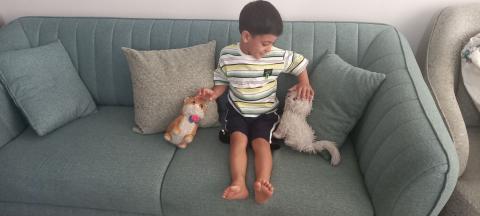
Because almost no vehicles remained inside the city, for the first time in my life I got on the back of a motorcycle driven by a man I did not know. In Iran, this is still considered socially unusual for many women, but under those circumstances none of the normal social boundaries seemed to matter anymore When I arrived, I went to check on the little boy. He was quietly playing with his dolls of cats and softly whispering to them: I’m sorry I bombed you… I’m sorry missiles hit you. He repeated those words over and over again. I could not stop thinking about how a three-year-old child had already absorbed the language of war so quickly — probably from television, frightened adults, and phone conversations around him.
Later that night, with the help of an acquaintance, we finally managed to leave Tehran through the heavy traffic. We were carrying bags full of colorful snacks and junk food for the two children traveling with us. We tried to distract them from the smoke, the fear, the sirens, and the panic surrounding us. One of the children happily said: What a fun trip this is! I wish we could always eat chips, candy, and snacks like this. That sentence stayed in my mind for a long time.
Children were trying to turn fear into something that looked like an endless holiday.
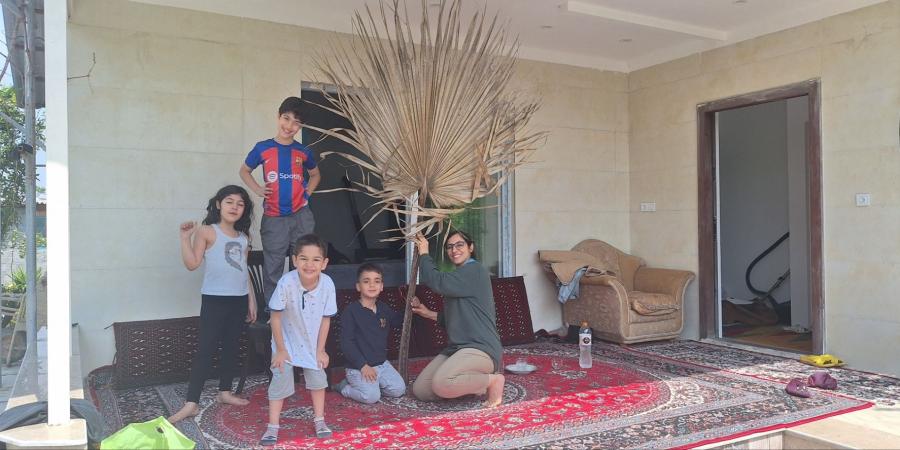
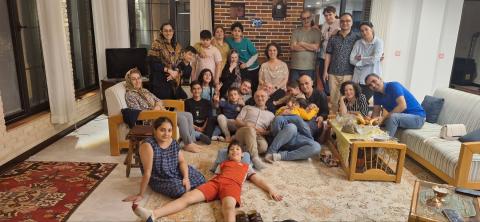
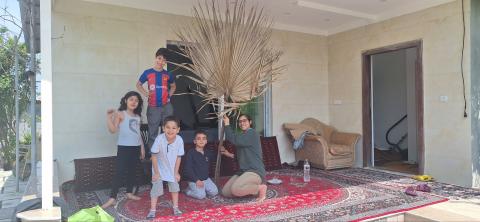
Eventually, we reached the north of Iran, which was considered relatively safe. We went back to my family’s ancestral village. Many relatives and families who had been living in dangerous areas had also returned to their hometowns. For the first time in my life, I saw almost the entire extended family gathered together in one place.
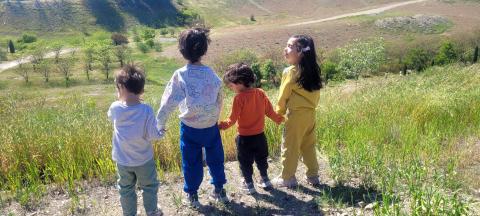
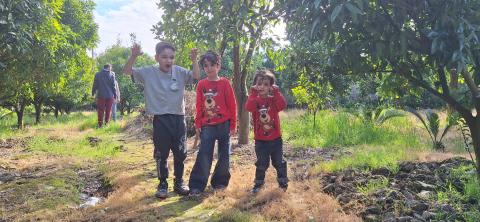
Children filled the village streets, gardens, beaches, and riverbanks. They were playing constantly, trying to turn fear into something that looked like an endless holiday.
One day, I asked a young child: Would you like to stay here forever? The child immediately replied: No, no. I smiled and said: But here you have forests, gardens, the sea, and no school. You can play all day. The child suddenly became quiet and emotional and answered: I miss my toys. I’m worried about them. Then, after a pause, the child added: If my toys come here too and my teacher comes and my mom and dad are here then I would want to stay forever. That conversation stayed in my mind because it reminded me that for children, safety alone is not enough Their world is built from small emotional attachments — toys, routines, teachers, familiar spaces, and the feeling that life is still normal. Because so many relatives had gathered together in the village, I naturally became responsible for much of the food preparation and daily shopping, so I spent a lot of time outside the house. One day, while standing in line at a bakery, I noticed several unfamiliar women buying unusually large amounts of bread. I realized they were not local villagers and had probably come there seeking safety from more dangerous areas. I approached them and started a conversation. They told me where they were staying, and I gave them my phone number. I said: Please don’t feel like strangers here. If you need anything, call me. They told me there was a pregnant woman among them. I gave them the address of an affordable fruit shop and also directed them to the local health center.
Since it was close to Nowruz, the Persian New Year, I also mentioned that I also work in women’s hairstyling and beauty services. I told them that if they needed any help related to hairdressing or personal care, they could contact me anytime.
Even small acts of care could ease a little of the emotional weight
During war and displacement, I realized that even small acts of care could ease a little of the emotional weight people were carrying.
As the days passed, the conflict continued without stopping. Besides our ancestral village, my father also owned a large citrus garden with a small villa in another nearby village. He had offered the house to distant acquaintances who had escaped from Tehran and had nowhere safe to stay, so they could rest there for a few days and find some peace in nature.
Around that time, we heard that one of our neighbors from Tehran — a father of two young children, aged two and six — had been diagnosed with cancer and was in very poor condition
At my brother’s suggestion, we invited the family to come to northern Iran and stay for a few days at my father’s villa. Coincidentally, the day they arrived was also the father’s birthday. We hesitated for a moment. Between war, fear, uncertainty, and his illness, we did not know whether organizing a birthday celebration was appropriate or meaningful at all but in the end, we decided that perhaps people need small moments of humanity during dark times.
With very little time to prepare, we organized a small surprise birthday celebration for him. We smiled, decorated the space as best we could, and tried to create joy for the sick father and his two small children — even though deep inside, our hearts were heavy with sorrow and uncertainty. For a few brief hours, that small family of four laughed together instead of thinking about war, illness, displacement, and fear.
After the Nowruz holidays ended and the first ceasefire was announced, we returned to Tehran. It was time to return to work and daily life. During the journey back, many children were asking their parents questions like: When will we go back to school? Or will we see ruin buildings? As I walked through the streets, I noticed that the metro, buses, and some forms of public transportation had temporarily become free. People seemed strangely emotional and grateful simply to see one another again. In workplaces, streets, and neighborhoods, many were trying to help each other in small ways.
One of my coworkers, who had remained in Tehran throughout the conflict, told me that they had tried to protect their young daughter from fear by telling her that the explosions were only fireworks. But one day, their seven-year-old daughter quietly said: Mom, I know you are lying. Those are bombs and war sounds.
Even after the ceasefire, fear continued living inside people’s bodies. One day at work, a door suddenly slammed shut with a loud noise because of the wind. Instantly, everyone in the room threw themselves under the desks for protection, before realizing it was not another explosion.
It took many days before even we, adults, stopped reacting to every loud sound as if another attack had begun. Beyond the visible destruction, war leaves behind many invisible wounds.
From my personal observations, I noticed changes in women’s physical and emotional wellbeing, especially among those visiting beauty and laser treatment centers during that period. In conversations with people, I also heard repeated mentions and concerns about pregnancy complications and miscarriages among acquaintances. These were not official statistics, but rather personal stories and shared experiences within communities under stress.
Among elderly people, I noticed something else: many became unusually sensitive to ordinary daily sounds. A slammed door, fireworks, traffic noise, or sudden loud sounds could immediately trigger fear and panic reactions.
These are the hidden ruins of war — the psychological and emotional damage that often remains long after the explosions end. I hope that one day peace can exist everywhere in the world, beyond religion, nationality, age, or political differences. I believe this future is only possible through awareness, education, empathy, and human connection.
Let us help each other create a world filled with more peace, dignity, and compassion for all people.